Multiple win with a digital twin
Unlock potential with the digital replica of your IT landscape for DevSecOps, IT service management & IT operations management
In a nutshellRequest demoStart free trialWhat is a digital twin?

What is a digital twin?
Originally known from manufacturing and IoT, a Digital Twin in IT is a dynamic, highly detailed virtual representation of your entire IT environment. It continuously mirrors all physical and virtual assets—such as servers, applications, databases, and network components—as well as their complex relationships and dependencies in real-time.
By mapping the complete digital anatomy of your infrastructure, this replica acts as a centralised Single Source of Truth. Instead of constantly searching through isolated tool silos, the digital twin intelligently aggregates IT data from a wide variety of sources into one unified view.
For users managing complex IT environments, this delivers three major benefits:
- Holistic Context - Evaluate facts, incidents, and configurations in their overall context, rather than in isolated silos.
- High Data Quality - Rely on a unique level of information availability and accuracy.
- Process Efficiency - Enormously improve and automate a variety of critical business processes.
Mapping the IT landscape
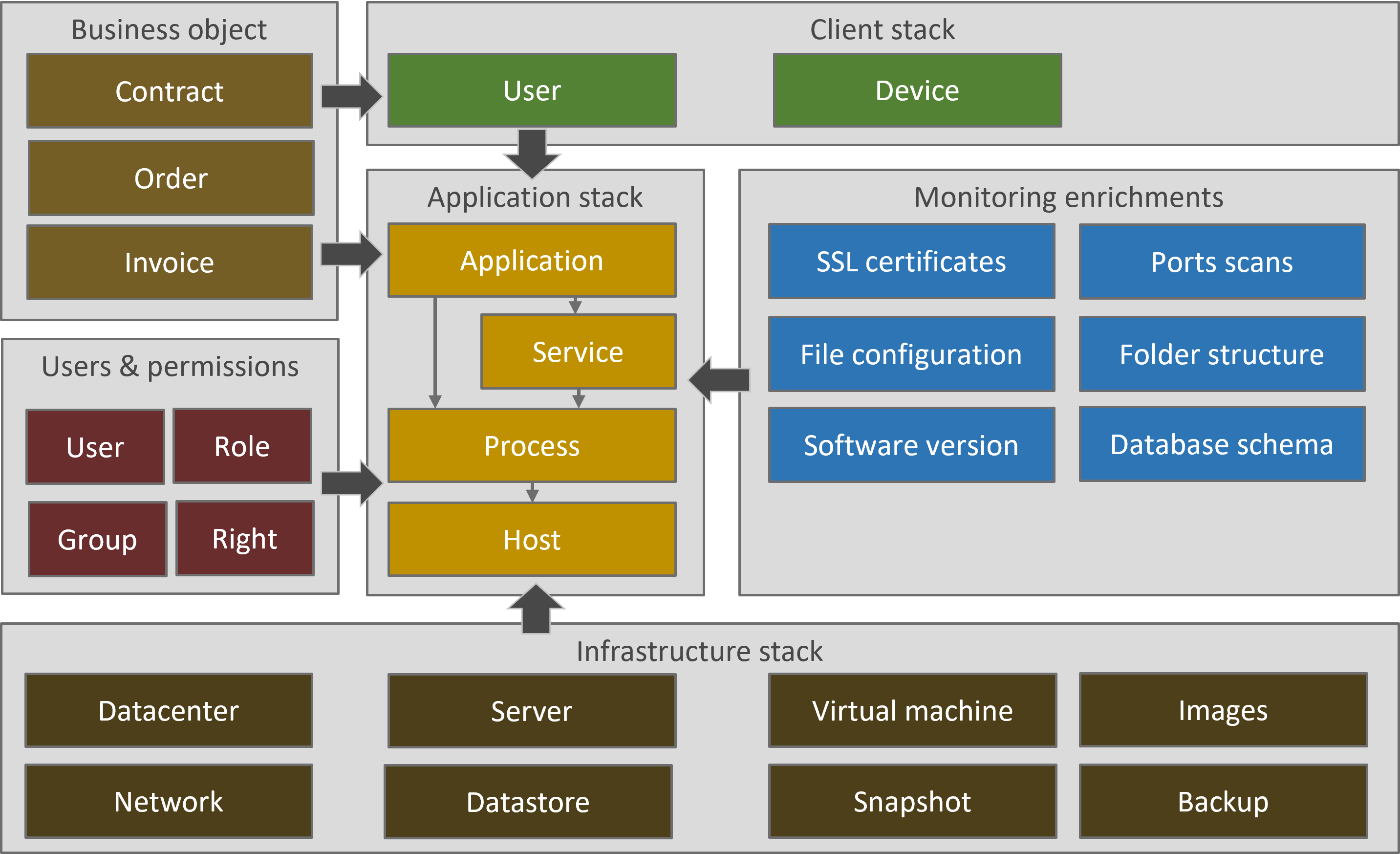
The following figure illustrates different areas of IT operations, highlighting typical IT components and assets that are mapped within a digital replica:
Automated data collection in practice
Automated data collection in practice
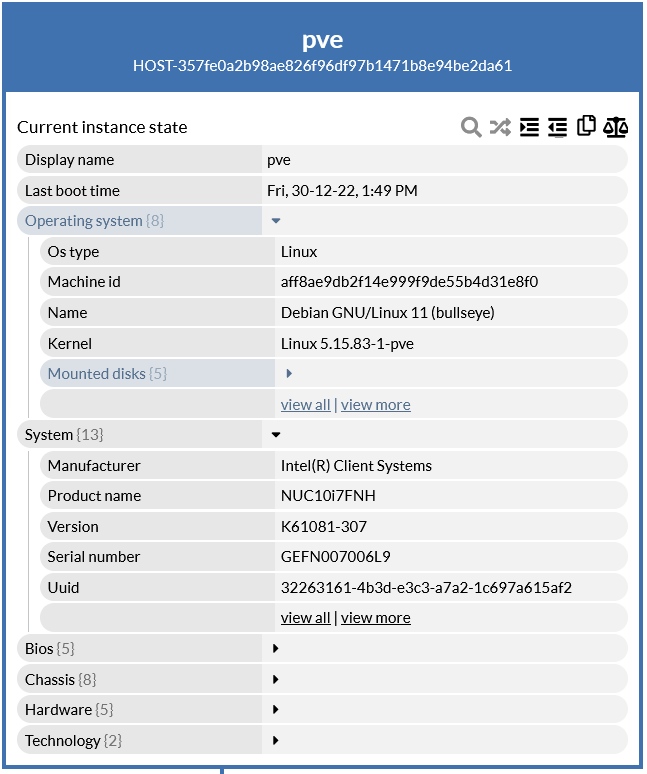
In the Versio.io product solution, a digital twin is never static. It is automatically collected and continuously updated in real-time.
Take a standard server as an example (consisting of hardware and the operating system): Depending on whether you use a virtualised or physical configuration, the digital twin makes between 150 and 800 detailed data attributes instantly available for analysis.
This granular level of detail means you instantly see everything from installed patches and open ports to specific configuration files. Manual data gathering becomes a thing of the past, freeing up your team to focus on proactive improvements rather than troubleshooting.
Key use scenarios in IT
- Continuously updated IT documentation
- Recognition of changes
- Monitoring and evaluating the execution of change requests
- Verify regulatory and internal requirements for IT governance compliance
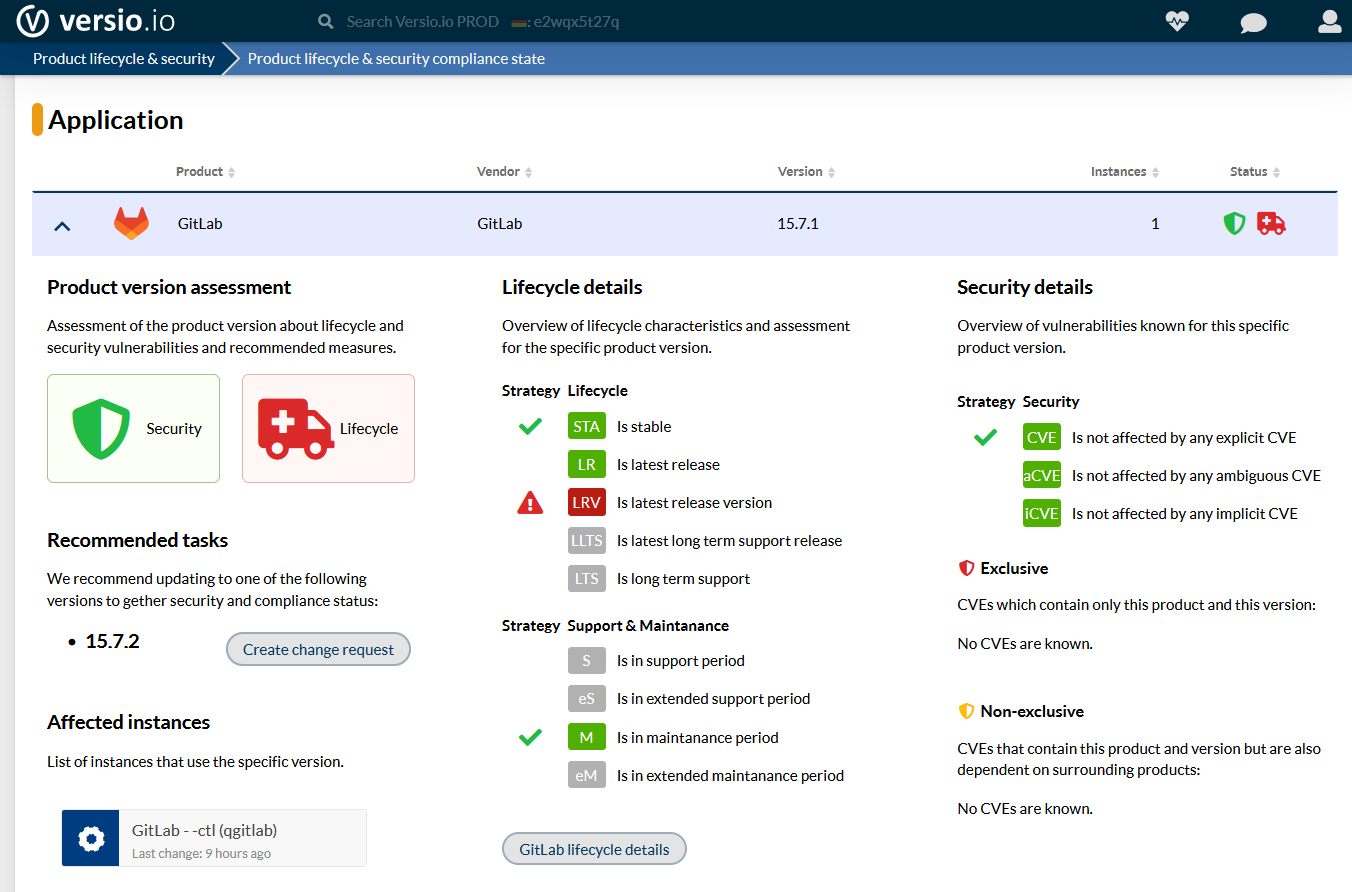
- Identify deployed and obsolete software versions (patch management) and security-related vulnerabilities (product and version-specific security vulnerabilities and configurations)
- Allocation of dynamically used IT resources
- Monitoring of specifications from Enterprise Architecture Management
- Comparison of complex topologies (e.g. database schema between TEST and PROD environment)
- Process mining based on process changes
Benefits of using a digital twin
- Centralised and location-independent information provision across the entire IT landscape.
- Availability of information about the current status including the historisation of changes to all IT components for problem analyses, audit security or recovery after a total failure.
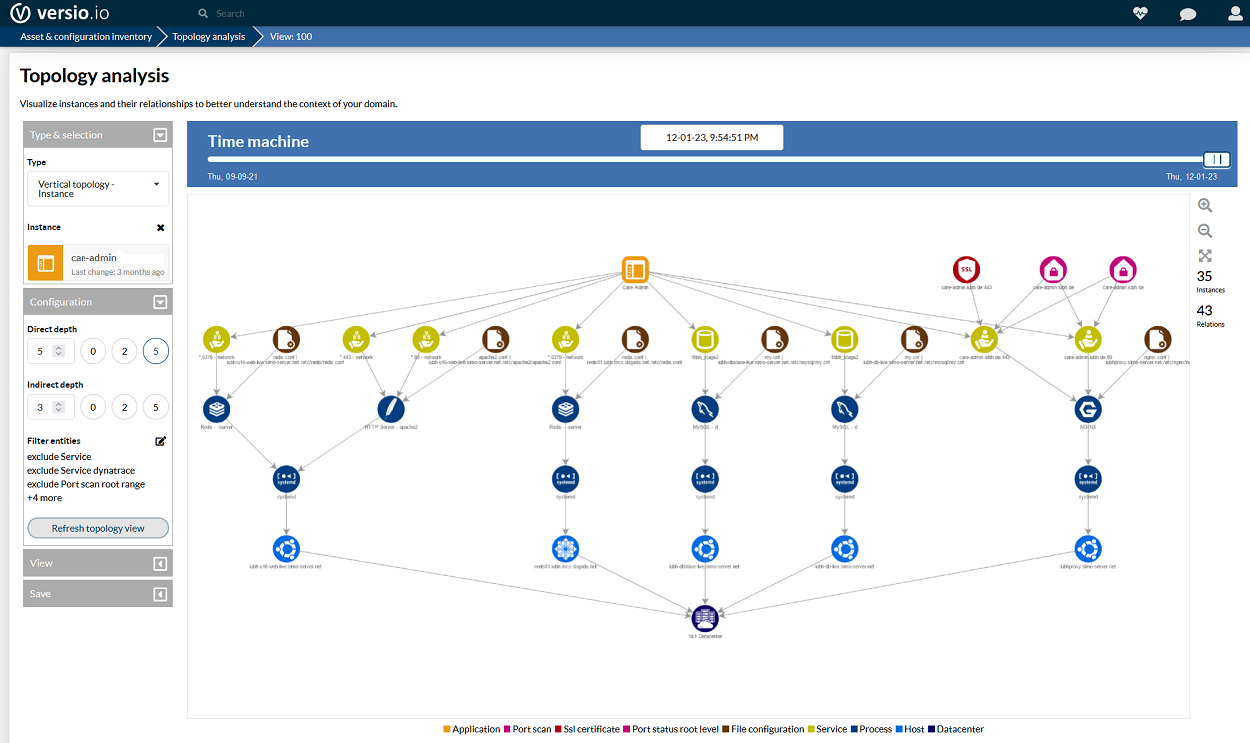
- Mapping of the overall context of all captured IT components from the different data sources (e.g. connection between SSL/TLS certificate and related IT service).
- Increased security, as internal and external employees do not need direct access to the executed IT component, but only its digital image.
- Simple data provision or integration for third-party systems on the basis of the information held and consolidated in the digital twin (e.g. DevSecOps, ITSM).